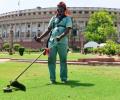
Officials have said the national capital lacked a convention centre big enough to seat so many MPs and adhere to social distancing norms. Additionally, holding a 'virtual session' looks slims as any change in the rules requires a motion to be carried in both the Houses of Parliament.
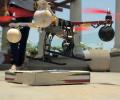
India took the first step towards legalising drones by officially publishing draft rules for drone operations in the Official Gazette on Friday. The rules, termed The Unmanned Aircraft System Rules, 2020, are open for public consultation for 30 days.

Mumbai, Bengaluru, and Kochi airports have hiked their landing charges by up to 45 per cent, increasing the operating cost for airlines at a time they are facing financial constraints because of the two months of grounding and weak demand.
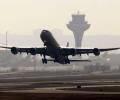
The move if implemented, will be a temporary measure to protect both consumers and airlines. A section of airline executives and experts, however, warned that any intervention in pricing would be counterproductive.
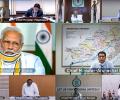
'The spirit of cooperation between the Centre and states has been diluted in many ways.' 'The level of consultation which used to be there earlier has reduced significantly.'
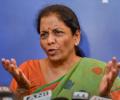
The government was going in the "wrong direction" and it was "highly condemnable" that it did not discuss the proposed changes with trade unions and other stakeholders, says BMS, trade union arm of the RSS.
During his interaction with the chief ministers, Prime Minister Narendra Modi assured that more economic activities would resume; he also said that zone identification may be left to the states.
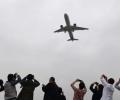
'Indian aviation cannot resume without at least three major airports being functional. If Delhi, Mumbai, Bengaluru, and Kolkata are shut, there is little chance that airlines will start flying even if the government gives the go-ahead.'

Companies across the sector are restructuring payrolls of crew, cutting allowances, and extending leave without pay duration as they realise they will have more aircraft and employees compared to customers.
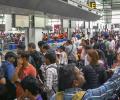
Extended check-in time, frequent disinfection every hour, additional queue managers at entry, exit, boarding point, check-in halls, security check areas and boarding gates, with social distancing markers and reminders - welcome to our airports post-coronavirus.
Aircraft lease rentals are fixed costs and account for around 15 per cent of an airline's expense and since these are paid in dollars are also subject to currency fluctuations.
The airlines have instead suggested compulsory personal protective equipment-like suit, gloves and mask for flyers and crew members.
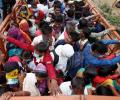
The Centre and state governments are struggling to restart at least some industrial activity as it becomes apparent that the 21-day nationwide lockdown imposed to check the spread of coronavirus disease (Covid-19) could be extended beyond April 14, and stocks of essential commodities need replenishing across the country. State governments, particularly those like Delhi that witnessed an exodus of migrant workers after the lockdown was announced, say there are not enough labourers in the city to work in factories and warehouses.
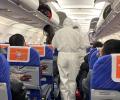
Empty middle seat, no duty-free shopping to be new normal till WHO all-clear.
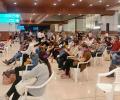
International and Indian airlines are refusing to refund cash and giving credit that can be used later.

A senior official in the central labour commissioner's office said the efforts of the government were to resolve the cases amicably and not to press for legal action against employers. "Everyone is going through tough times. We could initiate legal action if we want but that's not the idea. We want to address the issues amicably," the official said.
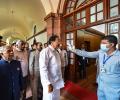
Many feel that the money from their MPLADS should go directly to a district hospital in their respective constituencies rather than a central fund like PM CARES. Archis Mohan reports.
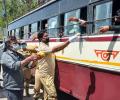
Bureaucratic insensitivity gave way to compassion with the state administration, police and passersby joining forces to help the stream of Indians fleeing Delhi.
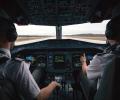
Chief executive officers of airlines have asked the government to bear 50 per cent of three months' salaries of employees.
According to a calculation by the government, India's airlines currently have 633 aircraft of which they may operate only 200.
 © 2026 Rediff.com - Advertise with us - Disclaimer - Privacy Policy - Sitemap - Feedback - About us - Terms of use - Grievances